
This project aims to enhance the Chinese proficiency of non-Chinese speaking (NCS) kindergarten students through Culturally Responsive (CR) Education, supported by an evidence-based ‘home-school-community’ collaborative model.
Website: http://www.c4chinese.hk/


Funded by The Hong Kong Jockey Club Charities Trust and organised by Hong Kong Street Soccer, the Jockey Club Homeless World Cup (Hong Kong) Fund-raising Tournament is one of the main programmes of the “Jockey Club Community Soccer for Hope”. Funds raised will pay for the trip of the Hong Kong team who will participate in the annual Homeless World Cup.
Through football, a more inclusive society can be achieved, and people can be encouraged to embrace the homeless and disadvantaged, and help them to live a more positive life.

In 2025, the Hong Kong Institute of Asia-Pacific Studies (HKIAPS) at CUHK conducted a survey to gauge public views on social mobility in Hong Kong. Around 59% of respondents believed that there were too few opportunities for upward social mobility for local young people, and nearly half expected those opportunities to worsen in the next 10 years or more. The survey serves as a continuation of themed research surveys conducted annually since 2022, tracking changes in public views over time and assessing whether these shifts are statistically significant. The findings underscore the need for targeted policies and initiatives to support youth development and address social inequalities, emphasizing the importance of creating a more inclusive and supportive environment for young people in Hong Kong.
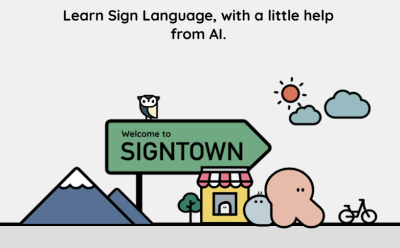
SignTown, the first-ever multi-language online sign language game in the world, was launched by the Centre for Sign Linguistics and Deaf Studies at CUHK to promote social inclusion for the deaf and enhance public awareness of sign language. Through adopting the AI-powered recognition model, game players receive immediate feedback on their signing accuracy and learn the concepts of sign language and deaf culture in an enjoyable and relaxing manner.
To reduce inequalities, policies should be universal in principle, paying attention to the needs of disadvantaged and marginalized populations.
- Visit the UN website to learn more.