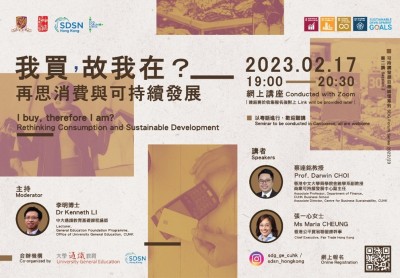
Hong Kong’s waste problem is severe. An average of 1.4 kg/person/day of municipal solid waste was sent to the landfills in 2024 for disposal, according to the Environmental Protection Department. Since 2018, the Office of University General Education (OUGE) at CUHK and SDSN Hong Kong have been organizing over 30 forums under the SDG Forum Series. There were multiple forums focusing on waste reduction, including What a Waste! – Rethinking Responsible Consumption and Production, I buy, therefore I am? — Rethinking Consumption and Sustainable Development and more. These forums helps promoting responsible consumption behaviour by highlighting the threat posed by overconsumption and the failure to dispose of local waste in a responsible and sustainable manner.
The Jockey Club Sustainable Campus Consumer Programme, funded by The Hong Kong Jockey Club Charities Trust, will implement a series of campus improvement and education initiatives in all 8 UGC-funded universities in Hong Kong (7/8 are SDSN Member universities) over a three-year period.
The Programme has three core areas of focus: (1) responsible choices, (2) responsible consumption and (3) responsible consumer activism. It aims to:
- reduce the overall campus consumption of energy and water by installing smart electricity meters and motion-activated showerheads;
- reduce the use of disposable food and beverage containers by developing takeaway container borrowing programmes; and
- increase the awareness and understanding of eco-labelling through various educational initiatives such as training in sustainability leadership and “carbon foodprint” labelling.
The project management team coordinating the Programme activities is housed within the Sustainability/ Net-Zero Office at the Hong Kong University of Science and Technology.
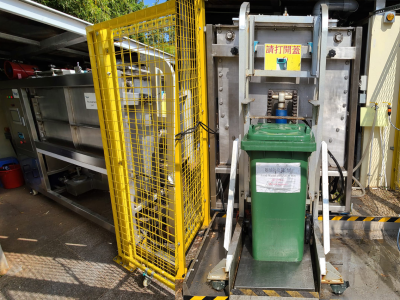
Food production is a huge contributor to carbon emissions. Greenhouse gases are generated at every step before food reaches our plates. On the CUHK campus in Sha Tin, more than 30 canteens provide daily catering services for about 30,000 students and staff. To curb food waste generation on campus, CUHK has introduced a pioneering food waste pre-treatment system, ‘Food TranSmarter’, which turns food waste into slurry for biogas production in the Tai Po Sewage Treatment Works. In 2021, this system generated around 20,100 kWh of renewable electricity and reduced carbon emissions by 40.2 tonnes.
A campaign called ‘Love Food, Hate Waste @CUHK’ was also launched to educate CUHK members on the urgency of food resource conservation and wastage prevention. Its activities include appointing ambassadors, promoting waste reduction in canteens, and setting up recycling facilities for caterers.
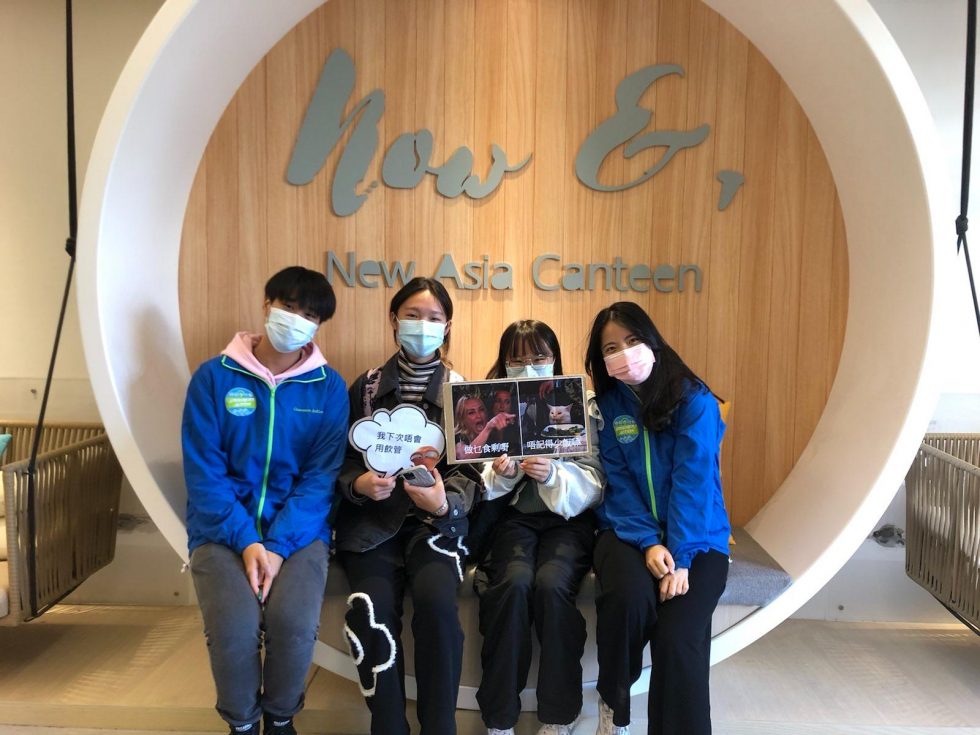
Launched in January 2026, CUHK’s campus-wide initiative, Waste-free Campus, encourages students and staff to adopt climate-positive habits aligned with CUHK’s Waste Management Policy. Built upon the framework of the 6Rs (Rethink, Refuse, Reduce, Reuse, Repair, and Recycle), the initiative prioritizes source reduction and circular resource management to minimize landfill disposal.
The initiative provides the university community with targeted resources, engaging activities and regular updates on sustainability information. By fostering sustainable behavioural changes on campus, the program serves as a practical model for institutional waste reduction and localized climate action within the higher education sector.
Ensuring sustainable consumption and production patterns is key to sustain the livelihoods of current and future generations.
- Visit the UN website to learn more.